Thursday, May 28, 2026
Expanded Application Reaffirms WECA's Commitment to Preparing Apprentices for the Future of the Electrical Industry

Step into the future of electrical training with WECA's new VR app ?(developed in-house; our second release)!
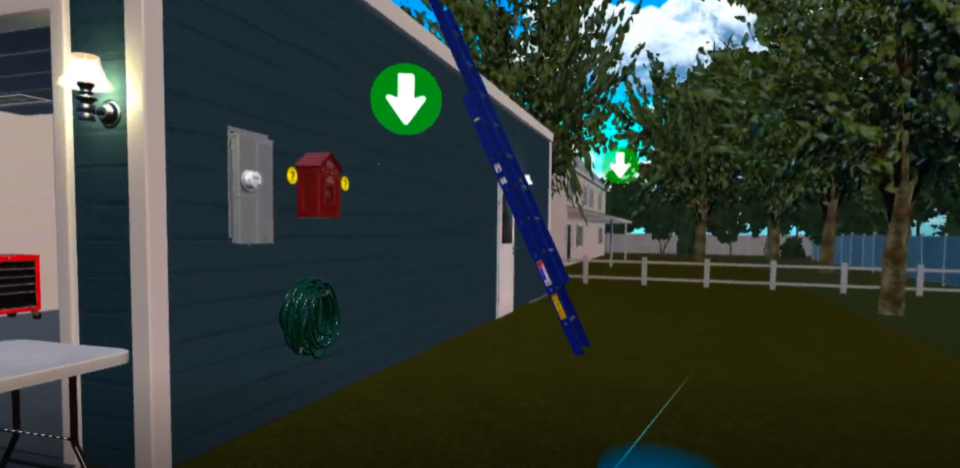
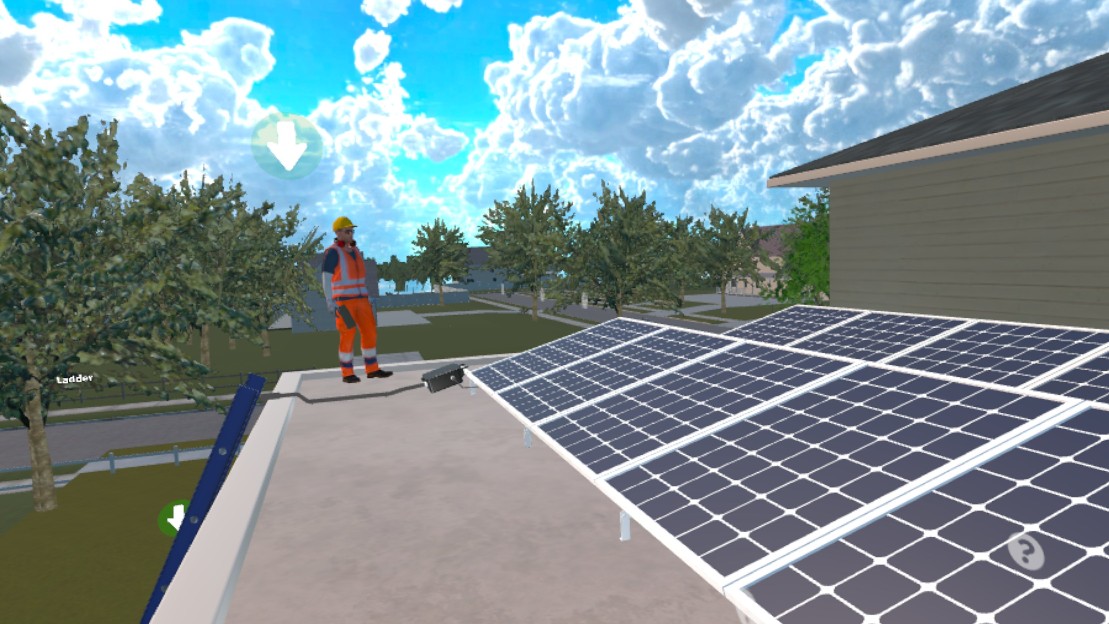
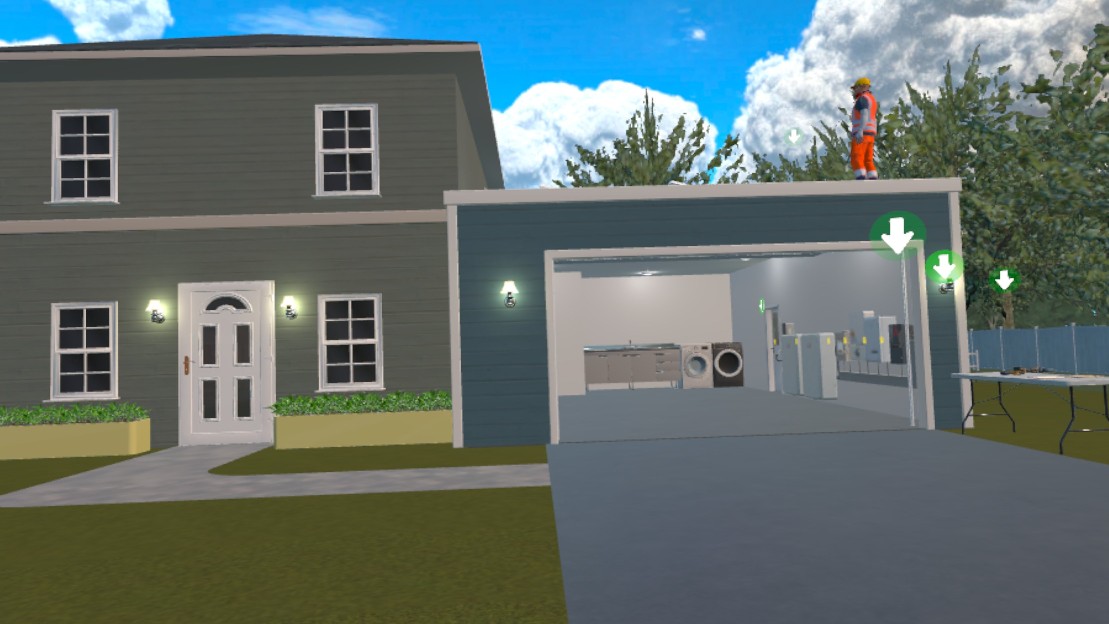
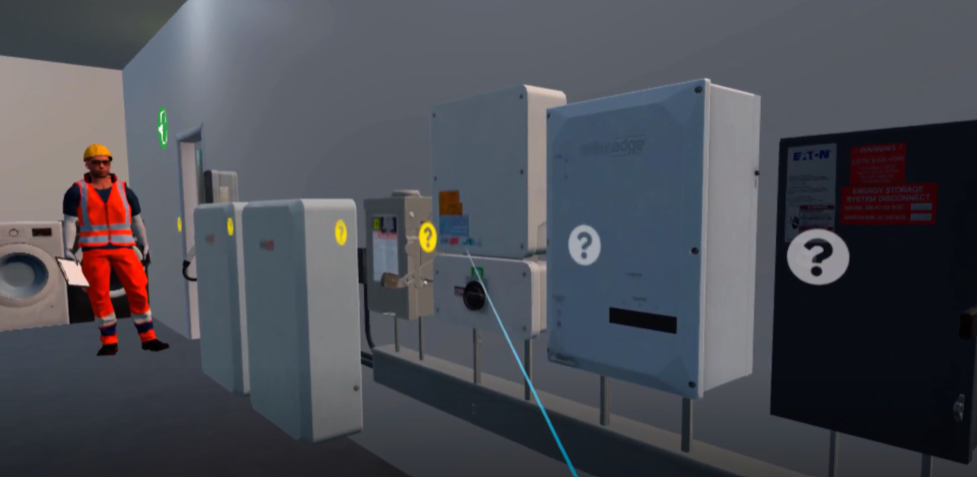
WECA’s Apprenticeship Curriculum Development Team has been hard at work expanding WECA’s repertoire of virtual reality (VR) applications.
“Our apprenticeship program is thrilled to launch a cutting-edge, custom-built VR training experience focused on residential green energy! This immersive simulation drops apprentices into a fully realized job site where they can explore freely, getting hands-on with the placement and function of key components for battery energy storage systems, EV charging, and solar installations. As they move through the space, they’ll sharpen their safety skills, test their knowledge, and engage with real-world regulations and best practices—all in a dynamic, interactive environment that brings the future of energy to life,” says Maris Kaplan, WECA’s Apprenticeship Curriculum Development Manager.
The new VR app, which will be incorporated into the second year, first semester of the Commercial and Residential Electrical Apprenticeship Programs as part of the larger Service Installation and Protection competency, will serve as a ‘prequel’ to an existing simulation that was rolled out at the end of 2023. The advanced green energy concepts of that first scenario, a larger-scale ESS system that commercial apprentices engage with in the fourth year, first semester of their program as part of the Power Generation and Distribution competency, will now be introduced earlier, in a scaled down residential setting.
WECA’s extended reality (XR) and virtual reality endeavors continue to be created with WECA Member Contractors in mind, to provide their apprentices with access to real-world, hands-on training environments from WECA’s classrooms and labs. As the electrical industry rapidly shifts toward sustainability, understanding green energy systems is becoming more important for today’s apprentices. Technologies like solar panels and battery energy storage are becoming standard in both residential and large-scale industrial projects, and demand for skilled workers who can install, maintain, and troubleshoot these systems continues to grow. Learning these skills will help keep Member Contractors’ apprentices competitive in the job market and help them play a direct role in building a more resilient, energy-efficient future.
“With any of our XR endeavors, we focus on industry needs that would be a challenge to teach with hands-on labs due to space constraints or safety risks. For our first custom-built app, which has been incorporated into the fourth year, first semester of the Commercial Electrical Apprenticeship Program as part of the Power Generation and Distribution competency, developments in the field related to large scale energy storage systems (ESS) and solar farms had been top of mind for us and our Member Contractors, so defining that need was our starting point,” says the Apprenticeship Curriculum Development team. “We were lucky to have access to a set of plans for a real-world ESS job site, and that served as the foundation for building that first simulation. We vetted numerous VR vendors to help build the virtual environment and finally chose one that also allowed us to have in-house control over the simulation’s “story”, meaning that we can change the knowledge checks and sequence of events ourselves, whenever we need to. That was important to us, since we know code updates are inevitable!”
“Similarly to the first time, we used some existing residential plans as a starting point, then worked with the VR company to have them model the equipment and components of a house with an EV charging station, battery energy storage system, and solar panels. Meanwhile, we programmed the storyline to have users explore the jobsite in kind of an open-world style, with knowledge checks along the way,” says the team.
For second year Commercial and Residential Electrical apprentices, the learning objectives of the simulation are to be able to identify components and recall functions related to residential PV Systems and backup systems. For fourth year Commercial Electrical apprentices, the objectives of the more advanced simulation are to not only identify and recall system functions, but also determine the requirements and processes needed for a successful large-scale ESS installation by way of completing a pre-commissioning inspection.
Thus far, apprentices have provided positive feedback on simulation pilot tests.
“Our apprentices seem to be getting pretty tech-savvy, because there were little to no issues with their using the headsets and navigating the simulated world, which was great to see,” says Kaplan. “Students who have worked on real-world green energy projects have remarked that the simulations are very similar, and many have said that the virtual site walk-through helps them to better connect the dots with the competency’s accompanying lectures and quizzes. Some of them are honest about missing a few of the simulation’s code questions, and we appreciate their honesty! The VR experiences aren’t used for assessment, just for augmenting their learning process. We aim for it to help retain knowledge as well as to identify areas where they could use more study, which is always a good thing, right?”
The Apprenticeship Curriculum Development Team’s work on developing another successful, state-of-the-art VR app reaffirms WECA’s commitment to preparing our apprentices for the future of the electrical industry by keeping them current and competitive in the ever-evolving and expanding green energy fields.
|